How to Read a Spark Plug
A spark plug is a window into your engine's combustion. The color and condition of the insulator nose and electrodes tell you how the engine is running — rich, lean, oil-burning, or worse. Use this photo reference to match what you see.
Before you read a plug
Run the engine first
A plug read only means something after a short run under load. Let the engine warm up and work for several minutes, then shut it off.
Let it cool
Wait for the engine to cool before removing the plug to avoid burns and thread damage.
Remove the plug
Disconnect the spark plug lead, blow debris away from the hole, and use the correct-size socket to remove the plug.
Read the insulator nose
Look at the ceramic insulator nose and the electrodes. Match the color and deposits to the conditions below.
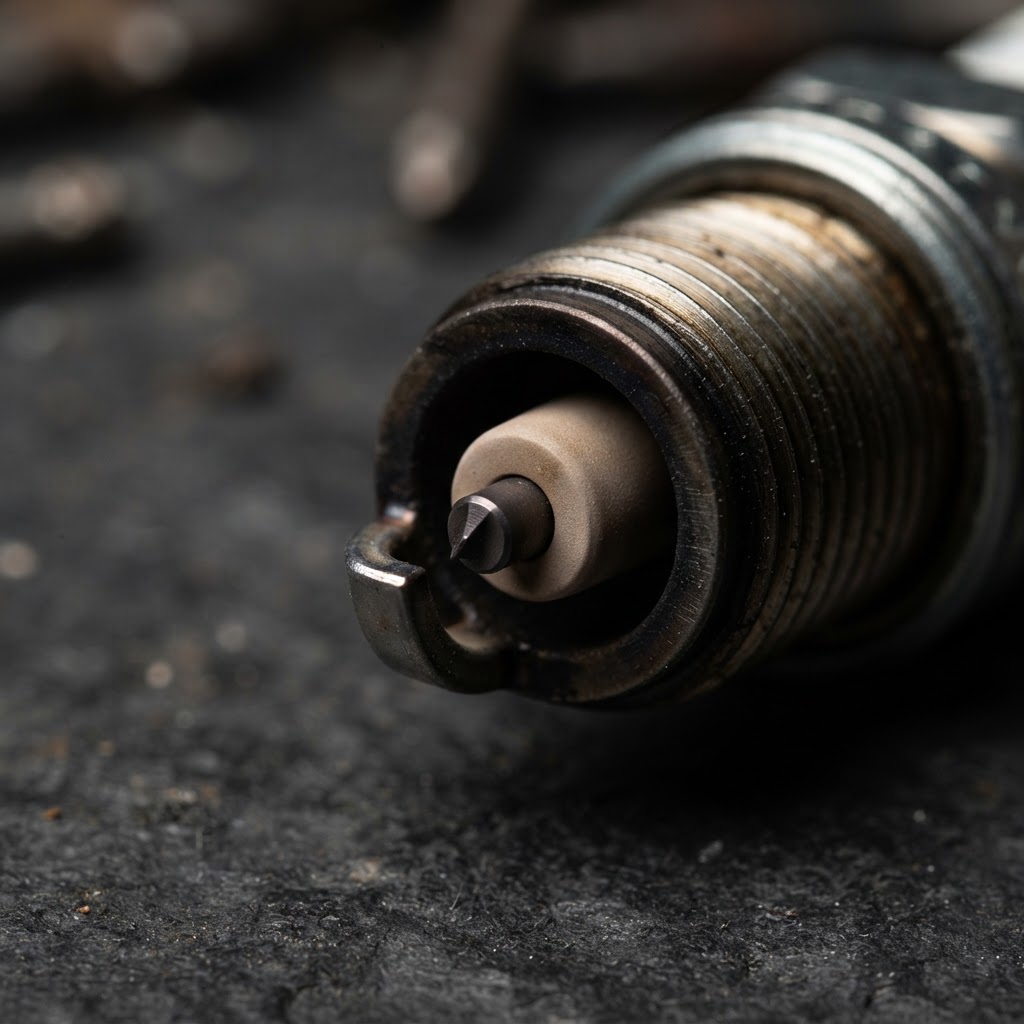
Normal / Ideal
Tan / light gray
Engine is jetted correctly and combustion is healthy. The insulator nose is tan to light gray with clean electrodes.
Likely causes
- •Correct air-fuel mixture
- •Proper plug heat range
- •Good oil control and clean combustion
What to do
- →No action needed — reinstall the plug.
- →Note the plug part number for future reference.
- →Replace at the manufacturer's service interval.
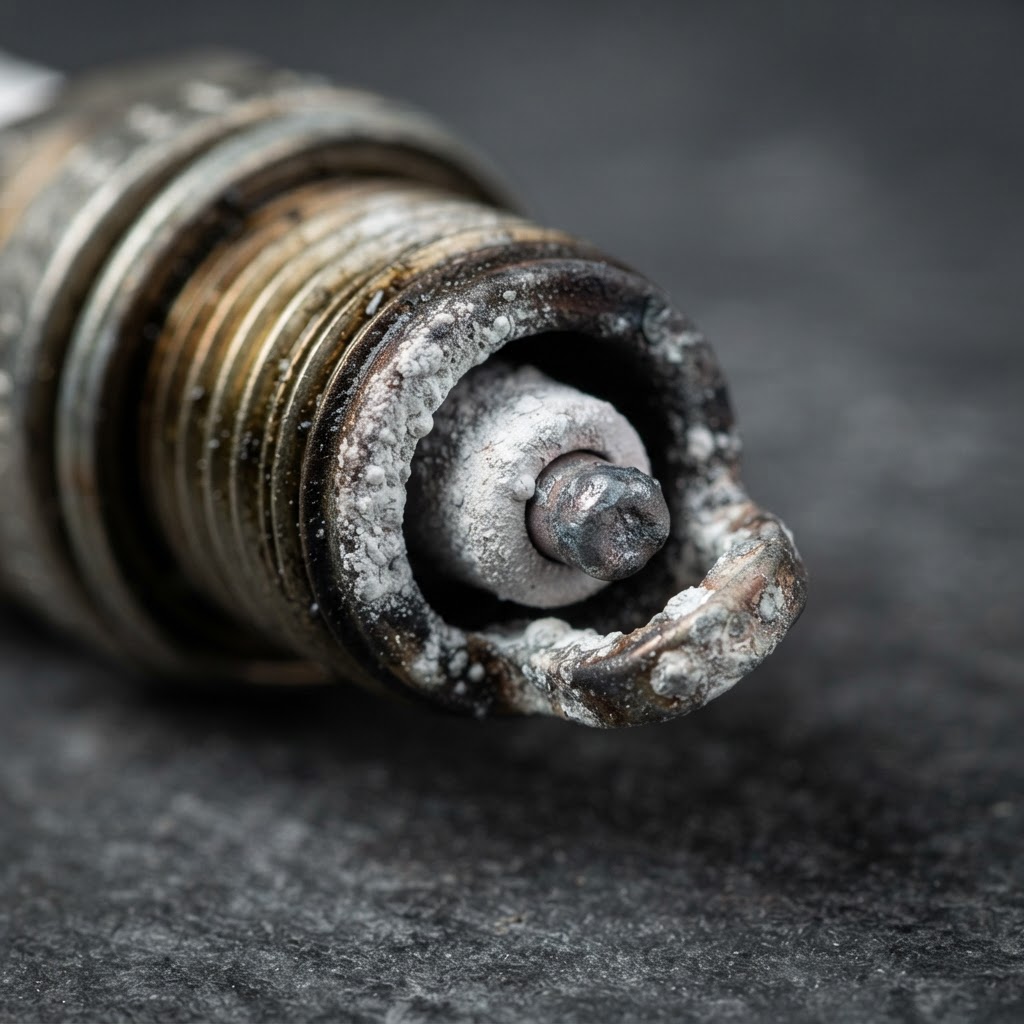
Lean / Hot
White / chalky
Too much air, not enough fuel — the engine is running hot. A white, blistered insulator and eroded electrode can lead to melted electrodes or burned valves.
Likely causes
- •Dirty or undersized carburetor main jet
- •Air leak at the intake or carb gasket
- •Partially clogged fuel passage / low float level
- •Plug heat range too hot for the engine
What to do
- →Inspect for vacuum leaks around the carb and intake boot.
- →Clean the carb and verify the main jet size is correct.
- →Raise the needle / richen the mixture to spec.
- →Confirm the plug heat range matches the service manual.
- →Check valve clearance on L-head and OHV engines.
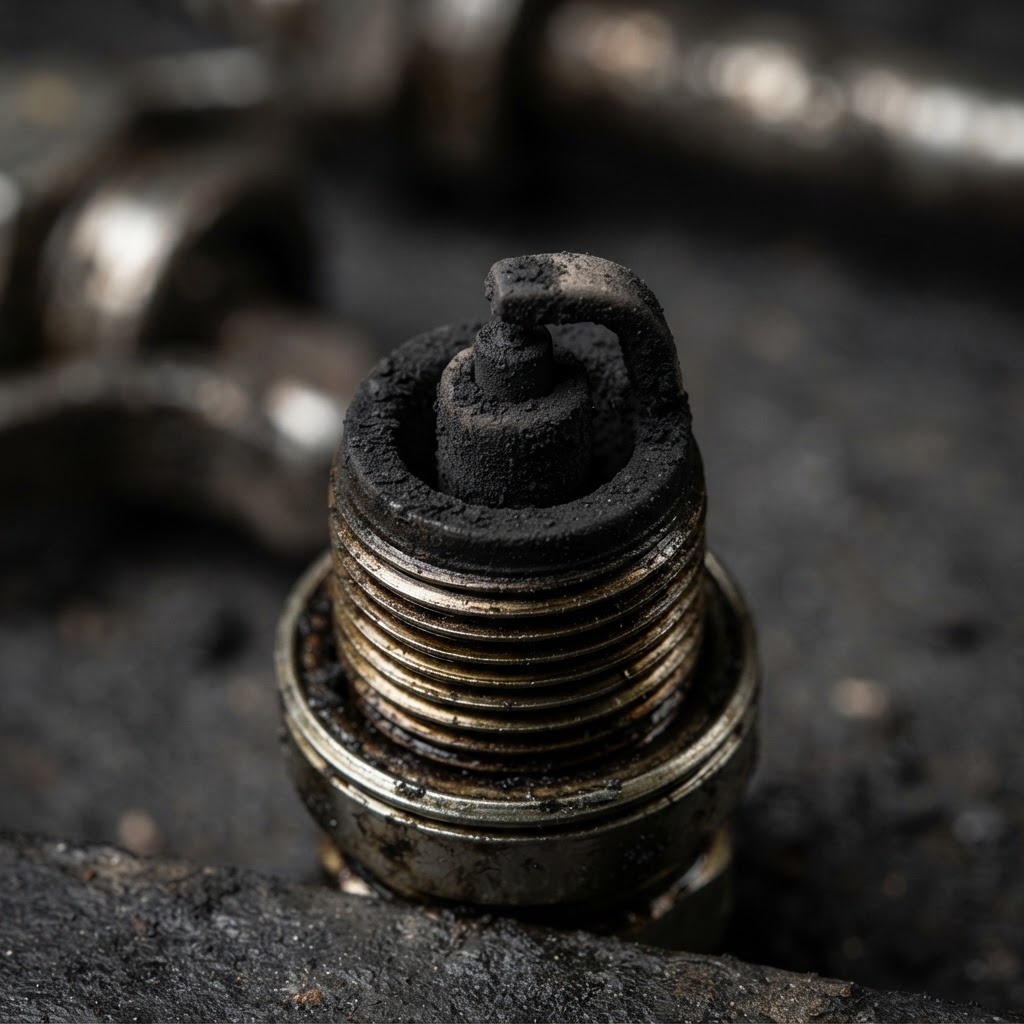
Rich Mixture
Dry black soot
Too much fuel, not enough air. Dry, matte black soot coats the insulator and electrodes — hard starting, poor economy, and smoke.
Likely causes
- •Clogged or dirty air filter
- •Float level set too high
- •Main jet too large
- •Choke stuck partially closed
- •Weak spark (plug gap too wide or failing coil)
What to do
- →Clean or replace the air filter.
- →Set float height to spec.
- →Verify the main jet size.
- →Check that the choke linkage returns fully open.
- →Inspect plug gap and ignition output.
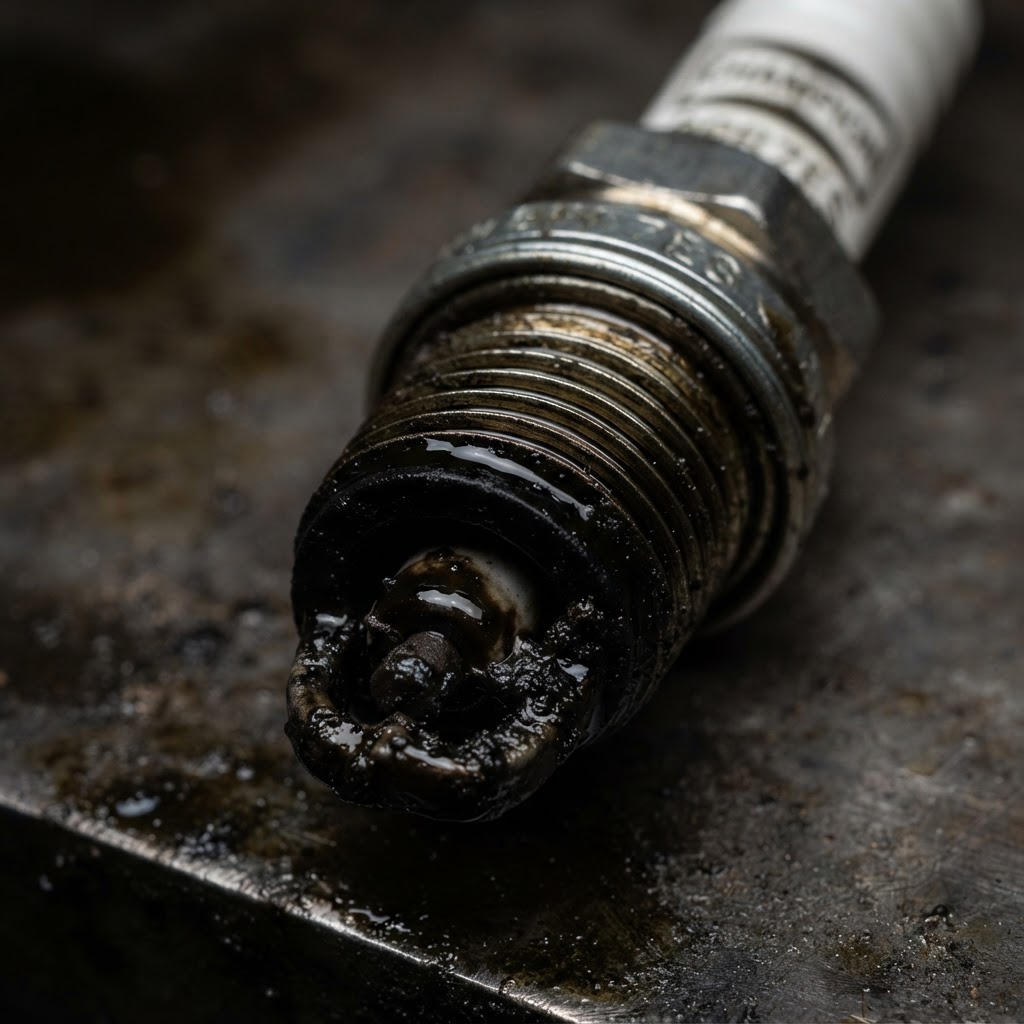
Oil-Fouled
Wet, oily black
Oil is reaching the combustion chamber. Wet, shiny black deposits foul the plug and cause misfire and blue smoke.
Likely causes
- •Worn piston rings or cylinder
- •Leaking valve guides or valve stem seals
- •Crankcase overfilled with oil
- •Wrong oil viscosity
- •Blocked crankcase breather / excessive blow-by
What to do
- →Check compression and run a leak-down test.
- →Inspect valve seals and guides.
- →Verify the oil level is correct.
- →Check the crankcase breather for blockage.
- →Rebuild the top-end if rings/cylinder are worn.
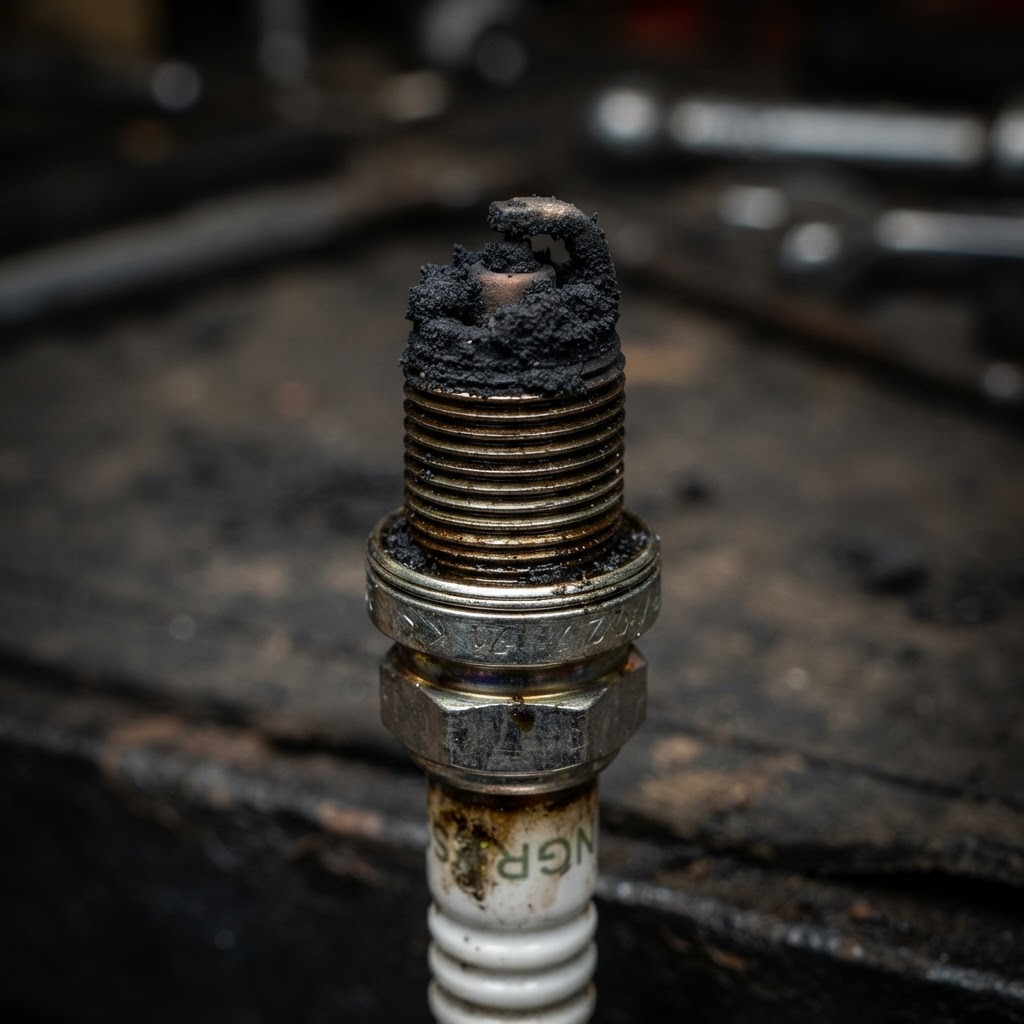
Carbon-Fouled
Dry, fluffy black crust
A dry carbon crust from incomplete combustion — common in engines that never reach operating temperature or have a weak spark.
Likely causes
- •Repeated short runs without warming up
- •Weak or intermittent spark
- •Plug gap too wide
- •Low compression
- •Plug heat range too cold
What to do
- →Run the engine under load to full operating temperature.
- →Check the ignition coil and spark output.
- →Reset the plug gap to spec.
- →Verify the plug heat range matches the manual.
- →Run a compression test if low compression is suspected.
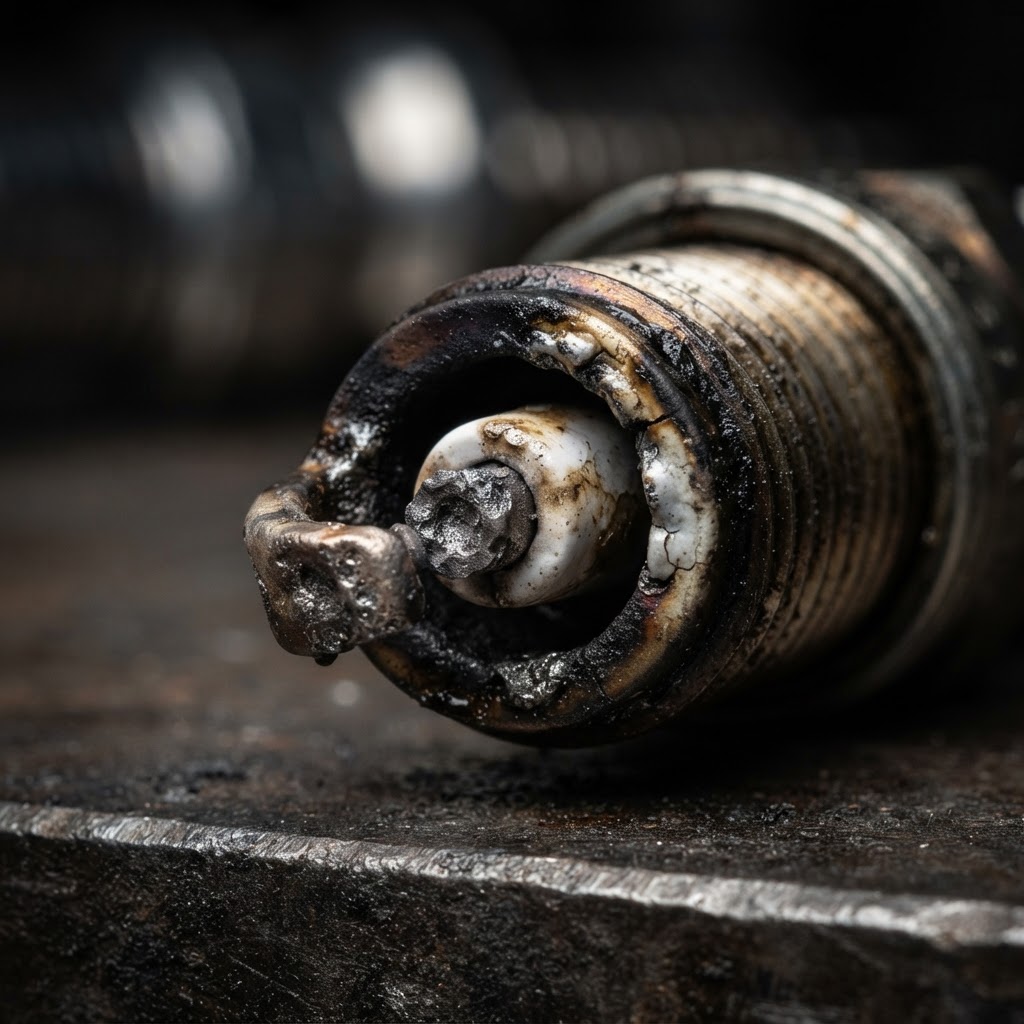
Overheated / Pre-ignition
White, blistered; melted electrode
Severe overheating — the center electrode is melting and the insulator is blistered. STOP the engine immediately to avoid piston or valve damage.
Likely causes
- •Plug heat range too hot
- •Lean air-fuel mixture
- •Heavy carbon build-up causing pre-ignition
- •Ignition timing too advanced (timed engines)
- •Cooling fins clogged or cooling air blocked
What to do
- →Stop running the engine before further damage.
- →Install the correct heat-range plug.
- →Correct the lean condition (see Lean / Hot).
- →Decarbonize the combustion chamber.
- →Clean cooling fins and shrouding.
- →Verify ignition timing on timed engines.
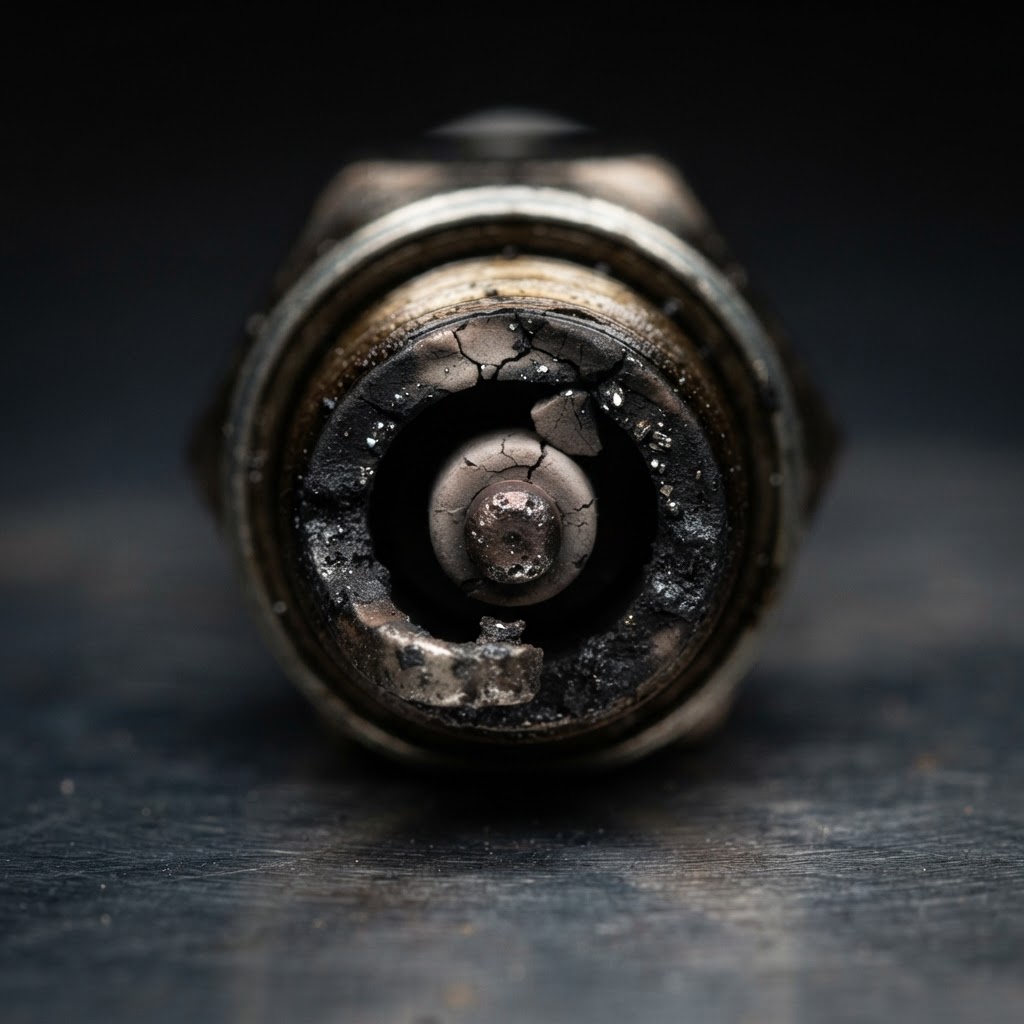
Detonation Damage
Chipped insulator, pitted electrodes
Knock/detonation has cracked the insulator nose and pitted the electrodes. There is a real risk of internal engine damage.
Likely causes
- •Low-octane or stale fuel
- •Lean mixture raising combustion temperature
- •Excessive carbon raising compression
- •Ignition timing too advanced
- •Engine overheating
- •Wrong plug heat range
What to do
- →Use fresh fuel of the correct octane.
- →Correct the lean condition.
- →Decarbonize the combustion chamber.
- →Verify ignition timing.
- →Install the correct heat-range plug.
- →Inspect the piston and cylinder for damage.
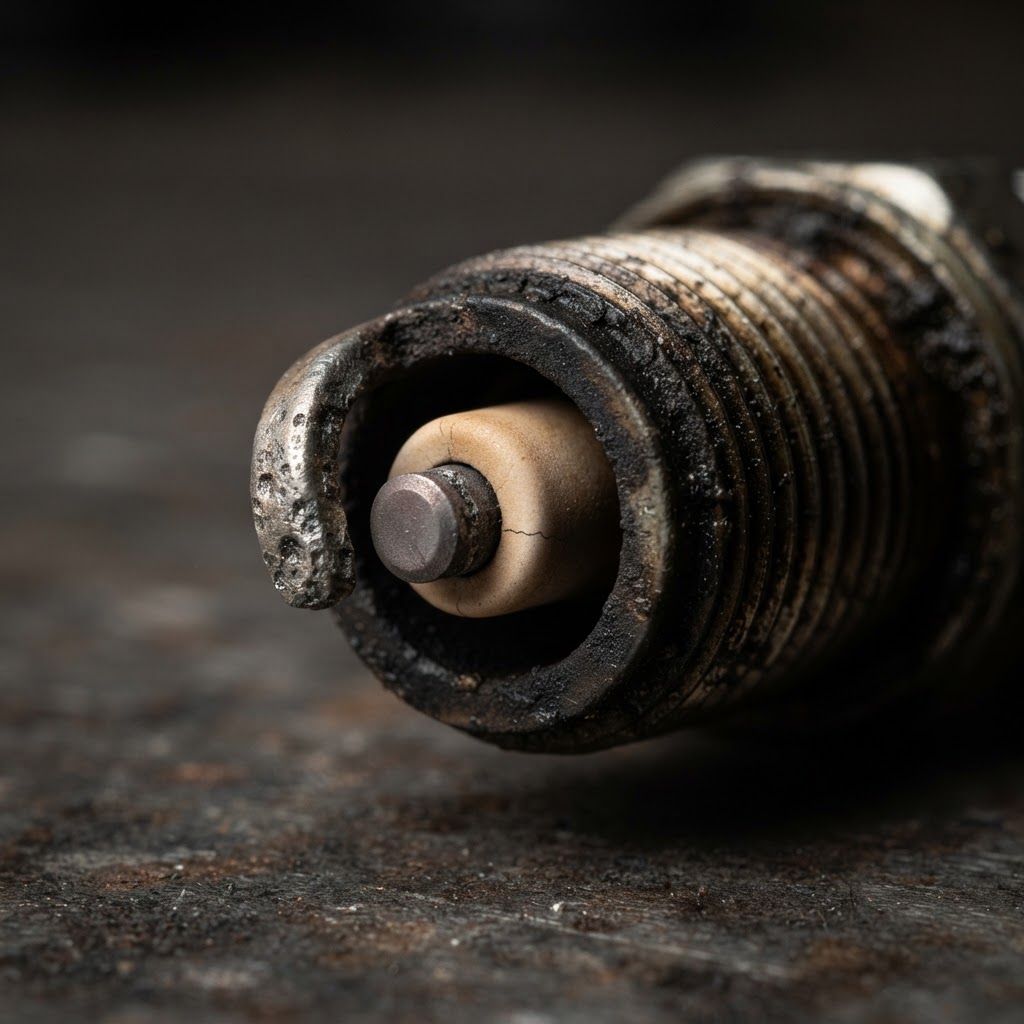
Worn / Excessive Gap
Clean but eroded; large gap
Normal aging — electrodes have eroded and the gap has widened. You'll see hard starting, weak spark, and intermittent misfire.
Likely causes
- •Long service interval
- •Normal electrode wear over many hours
- •Weak spark from the widened gap
What to do
- →Replace the plug with the correct part number.
- →Gap the new plug to spec (typically .028"–.030").
- →Record the service hours for the next interval.
Critical conditions require action before running again
If a plug shows overheating or detonation damage, stop the engine and fix the underlying cause before running it again. Continuing to operate can damage the piston, valves, or cylinder. Always disconnect the spark plug lead before working near the plug.

